
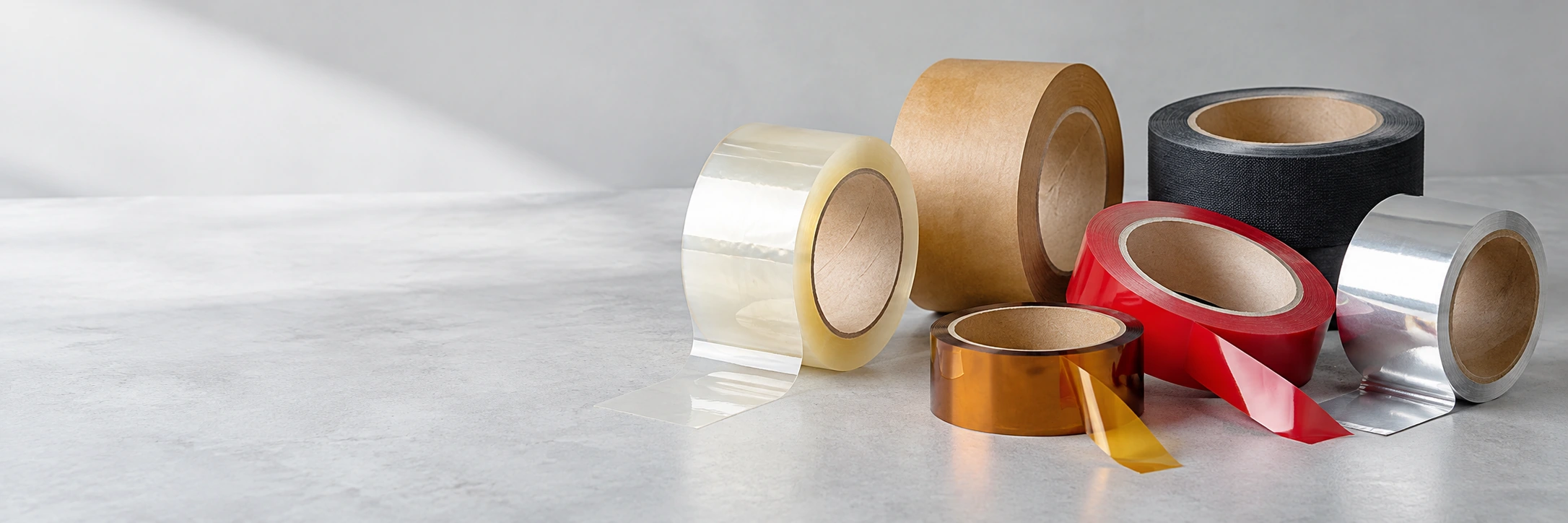
- Start from the surface and the environment, not from the tape type.
- Backing decides strength, conformability and temperature; adhesive decides what it sticks to and for how long.
- Always test a sample on the real surface before ordering volume.
Our catalog lists more than 57,000 adhesive tapes in 60 categories. That sounds overwhelming, but almost every selection comes down to the same five questions. Answer them in order and you will end up with two or three candidates to sample instead of hundreds.
1. What surface are you bonding to?
Adhesion starts with surface energy. Metals, glass and most painted surfaces are high-energy and easy to bond. Polyethylene, polypropylene, powder coatings and silicone-treated surfaces are low-energy and repel most adhesives. Rough, dusty or porous surfaces (concrete, cardboard, wood) need a thicker, softer adhesive that flows into the texture. If you are unsure, read our explainer on acrylic, rubber and silicone adhesives.
2. What environment will the tape see?
- Temperature: rubber adhesives soften above roughly 60–80 °C; acrylics typically handle 90–150 °C; silicone adhesives on polyimide or PTFE go far beyond 200 °C. See our temperature ranking.
- UV and weather: outdoors, choose acrylic adhesives and UV-stable backings such as PVC, aluminum or butyl.
- Water and chemicals: butyl, PVC and PTFE backings resist water and many solvents; paper backings do not.
3. What load must it carry?
Packaging tape resists a quick peel when a carton is opened; a mounting tape must hold a constant load for years. For hanging or structural loads look at acrylic foam high-bond tape and check the shear rating, not only peel adhesion. Our guide to reading tape data sheets explains the numbers.
4. How long must it last — and should it come off cleanly?
Temporary jobs (masking, surface protection, event marking) need clean removal: crepe and painter’s tape, protective film or gaffer tape. Permanent jobs want an adhesive that keeps building strength over 24–72 hours.
5. Which backing fits the job?
| Backing | Strengths | Typical tapes |
|---|---|---|
| BOPP / OPP film | Cheap, strong, clear | Carton sealing |
| PVC film | Stretch, flame retardant, insulating | Electrical tape, floor marking |
| Cloth / scrim | Hand-tearable, conformable | Duct tape, gaffer tape |
| Foam (PE, EVA, acrylic) | Gap filling, shock absorbing | Mounting tape |
| Polyimide / PTFE / glass cloth | High temperature, chemical resistance | PI tape, PTFE tape |
| Aluminum / copper foil | Vapor barrier, heat reflection, shielding | Foil tape, copper tape |
Test before you buy in volume
Apply the sample on the real part, press firmly (pressure activates a pressure-sensitive adhesive), wait 24 hours and test under the real temperature. The industry test methods are published by the Pressure Sensitive Tape Council. When you are ready, send us the surface, size and quantity — we suggest candidates and send samples.
Examples from our general-purpose adhesive tape range — see all 2,781 →
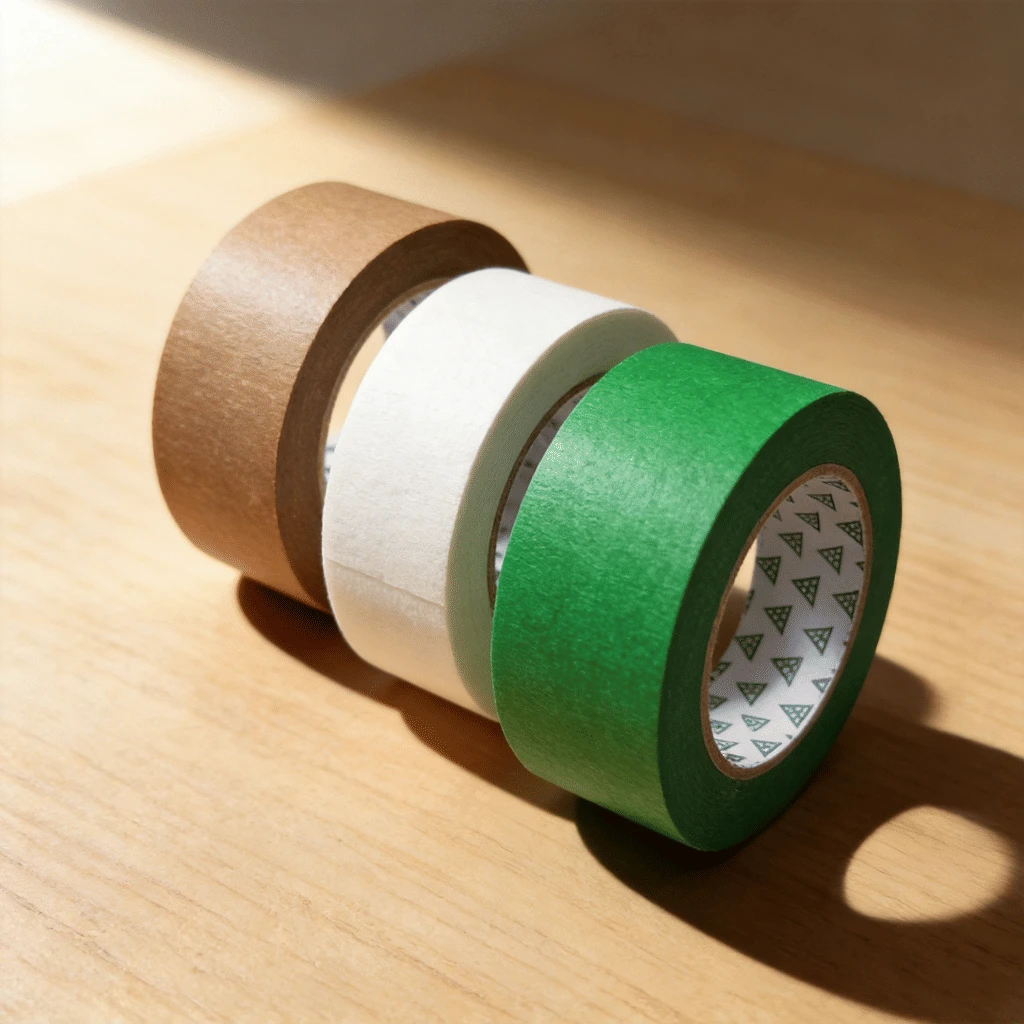
Zw103 Strong Adhesive Colored Tape for Metal Flat Surface Bouquets
Laminated tape of kraft paper · Acrylic Acid
US$0.37 – 1.54MOQ 100 pieces

Zip Nylon Cable Wire Tape
Nylon · 2.5mm, 3.6mm, 4.8mm, 7.6mm, 9mm
US$0.16 – 2.31MOQ 1,000 bags

Zhejiang Origin Stainless Steel Tape
Stainless Steel · Black & Customize
US$0.012MOQ 100 pieces

Zb139 Acrylate Rubber Sealing Tape with Set Color Printing
BOPP · Acrylate, Rubber, etc
US$0.28 – 3.12MOQ 3,168 pieces

Yulan Transparent Mobilon TPU Tape 25mm Wide Clear Rubber Band
TPU · 0.08mm–0.35 mm
US$0.0001 – 11.88MOQ 30 kilograms
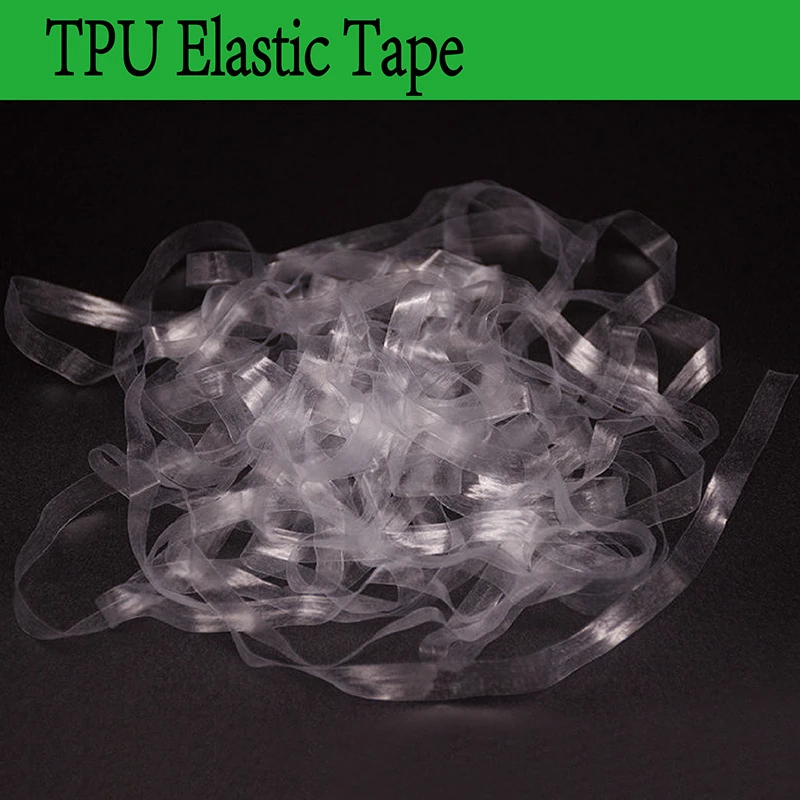
Yulan Custom Bag Package T-Shirt Knitwear Use 6mm Wide Straight TPU-Tape Elastic
TPU · 0.08mm–0.35 mm
US$0.0001 – 11.88MOQ 30 kilograms
Frequently asked questions
What is the most versatile adhesive tape?
There is no single best tape. For general indoor use a rubber-adhesive cloth or PVC tape is the most forgiving; for long-life outdoor bonding an acrylic adhesive is usually the safer choice.
How do I know if a tape will stick to plastic?
Low-surface-energy plastics such as PE and PP need a modified acrylic or rubber adhesive. Ask for a sample and test peel adhesion on the actual part after 24 hours.
Can I order a custom width or length?
Yes. Most tapes are slit from wide jumbo rolls, so width, length and core size can be made to order; the MOQ depends on the material.
Find these tapes in our catalog
General-Purpose Adhesive Tape · Foam Mounting Tape · BOPP, OPP & Carton Sealing Tape
buying guidepressure-sensitive adhesivetape selection
Related articles
Double-Sided Tape Guide: Foam, Acrylic High-Bond, Tissue, PET and Nano Gel
Six families of double-sided tape, what each carrier does, and how to match thickness, adhesive and liner to…
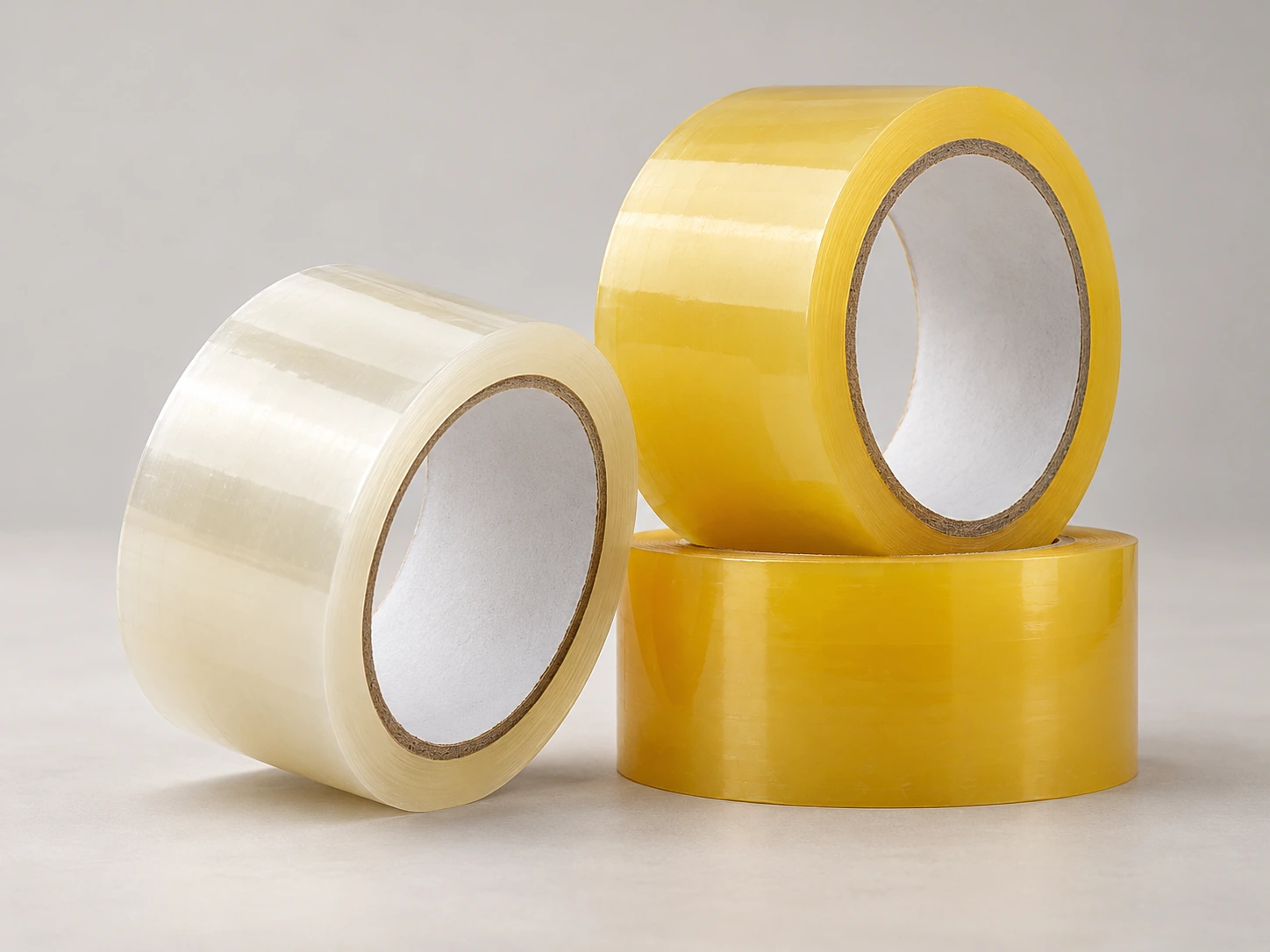
BOPP Carton Sealing Tape Buying Guide: Thickness, Width, Adhesive and Roll Length
Microns, widths, hot-melt vs acrylic vs solvent adhesive, hand rolls vs machine rolls — everything that changes the…
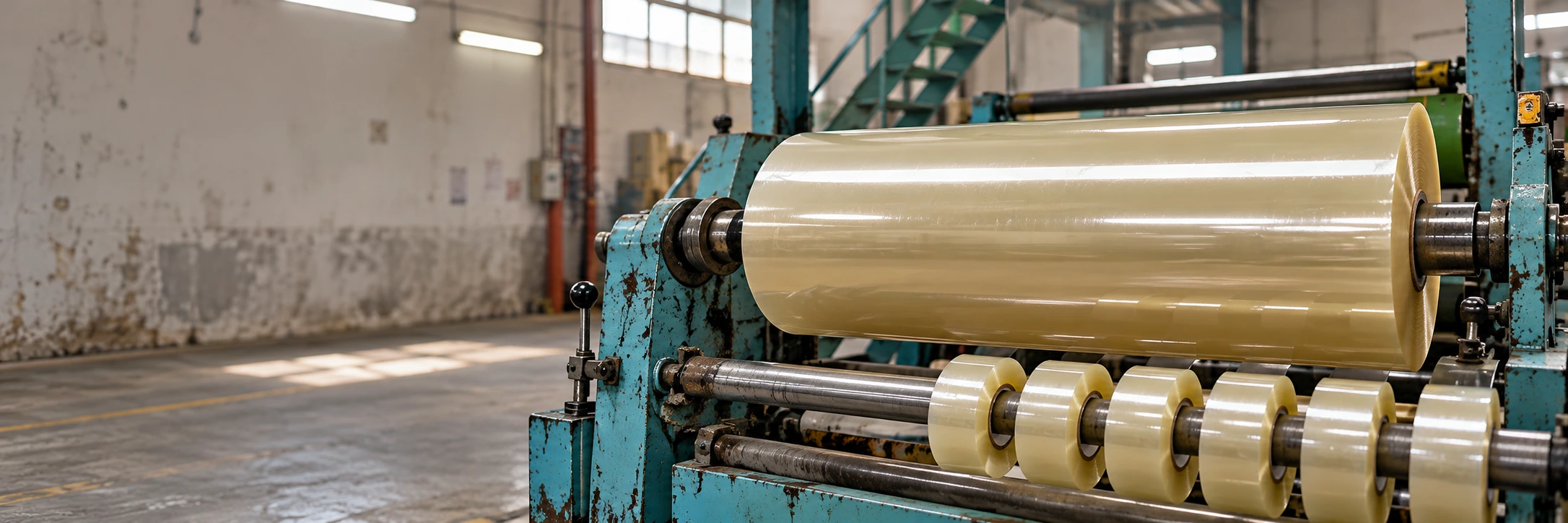
The 12 Largest Tape Categories in Our Catalog — Ranked by Number of Products
A live ranking of the tape categories with the most listings, with typical price ranges — useful to…