
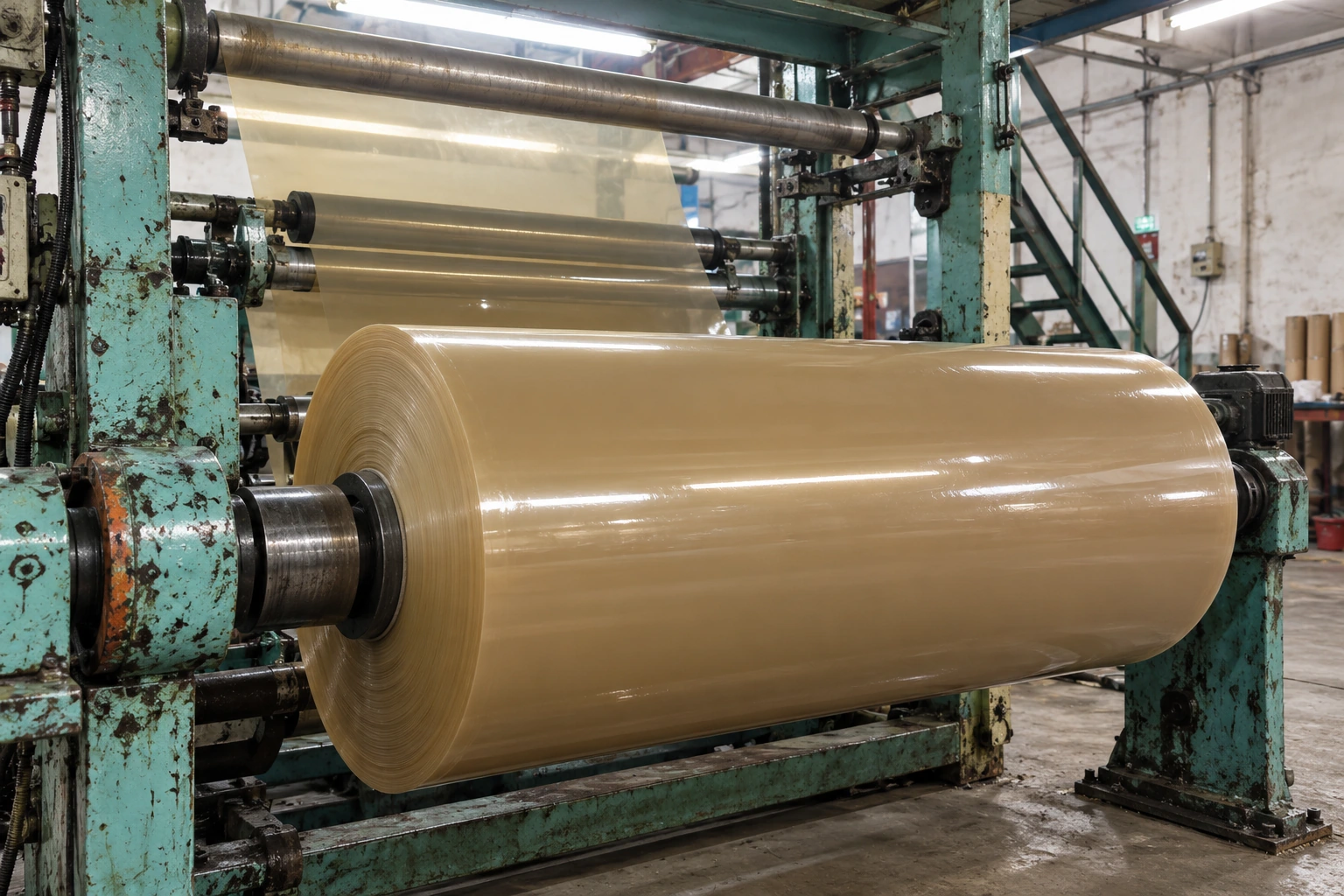
- Rubber adhesives: highest initial tack and lowest cost, limited heat and UV resistance.
- Acrylic adhesives: slower to build strength, but excellent ageing, UV and heat resistance.
- Silicone adhesives: stick to silicone and survive 200 °C+, at a higher price.
A pressure-sensitive adhesive (PSA) is a permanently tacky material that wets a surface under light pressure — no water, heat or solvent required. It is a viscoelastic balancing act: soft enough to flow into the surface (tack), firm enough to resist pulling apart (cohesion). Three chemistries dominate.
Rubber-based adhesives
Natural or synthetic rubber blended with tackifying resins. They grab almost instantly, even on cardboard and slightly dusty surfaces, and they are the cheapest option — which is why they dominate duct tape, masking tape and hot-melt carton sealing tape. Weaknesses: they soften with heat, yellow and harden in UV, and can leave residue as they age.
Acrylic adhesives
Built from acrylate polymers, either water-based or solvent-based. Initial tack is lower, but bond strength keeps rising for one to three days. Acrylics resist UV, oxidation, plasticizers and temperatures of roughly 90–150 °C, so they are the default for outdoor signage, structural foam tape, transfer tape and reflective tape.
Silicone adhesives
Silicone PSAs are the only common adhesives that bond to silicone rubber and release liners, and they stay stable from far below zero to above 200 °C. They are paired with heat-resistant backings: polyimide, PTFE and glass cloth and green PET masking tapes for powder coating and soldering.
Side-by-side comparison
| Rubber | Acrylic | Silicone | |
|---|---|---|---|
| Initial tack | Very high | Medium | Low–medium |
| Ultimate strength | Medium | High | Medium |
| Temperature (typical) | up to 60–80 °C | up to 90–150 °C | up to 200–260 °C |
| UV / ageing | Poor | Excellent | Excellent |
| Low-energy plastics | Good | Fair (modified grades good) | Fair |
| Relative cost | $ | $$ | $$$ |
Which one should you specify?
Indoor, short life, porous or dusty surface: rubber. Outdoor, long life, glass or metal: acrylic. Heat above 150 °C or silicone surfaces: silicone. If two options seem to fit, order samples of both — our tape selection guide shows how to test them. Product listings state the adhesive in the specification table; search for example acrylic double-sided tape or silicone adhesive tape.
Frequently asked questions
Is acrylic or rubber adhesive stronger?
Rubber grabs faster; acrylic usually ends up stronger and lasts longer after 24–72 hours of dwell time, especially outdoors or in heat.
What is a hot-melt adhesive tape?
Hot-melt usually means a synthetic-rubber adhesive applied molten. It gives high tack at low cost and is common on carton sealing and double-sided tissue tape.
Why does silicone adhesive cost more?
Silicone polymers are more expensive and need curing; they are used where heat or silicone surfaces rule out other adhesives.
Find these tapes in our catalog
Tissue, PET & Transfer Adhesive Tape · Acrylic Foam & High-Bond Tape · Polyimide (PI) Tape
acrylic adhesiveadhesive chemistrysilicone adhesive
Related articles
Why Tape Loses Its Grip: 7 Causes of Adhesion Failure and How to Fix Them
Dust, low-energy plastics, cold application, plasticizers, too little pressure, wrong adhesive and old stock — the seven usual…
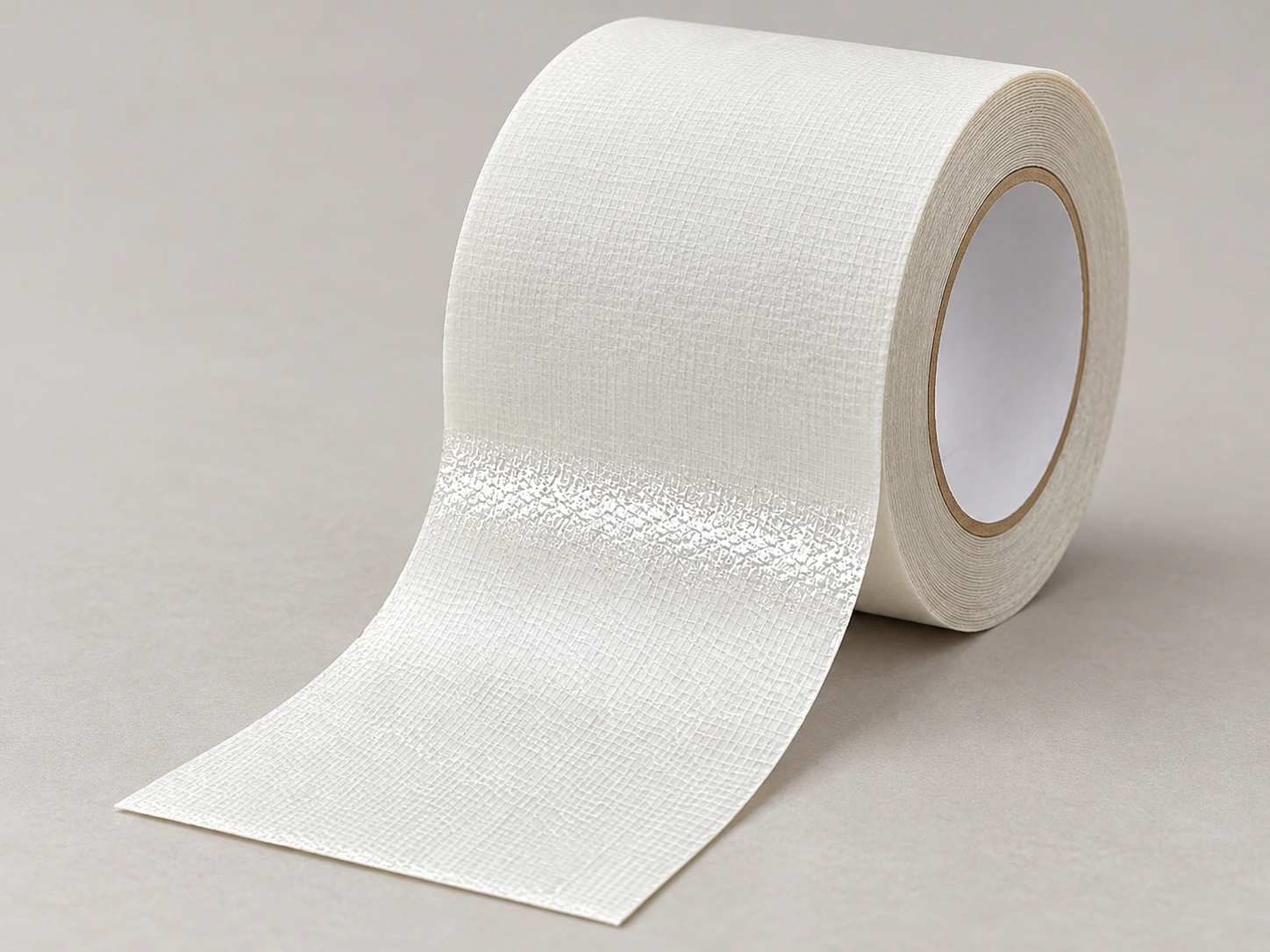
Double-Sided Tape Guide: Foam, Acrylic High-Bond, Tissue, PET and Nano Gel
Six families of double-sided tape, what each carrier does, and how to match thickness, adhesive and liner to…
The 12 Largest Tape Categories in Our Catalog — Ranked by Number of Products
A live ranking of the tape categories with the most listings, with typical price ranges — useful to…