
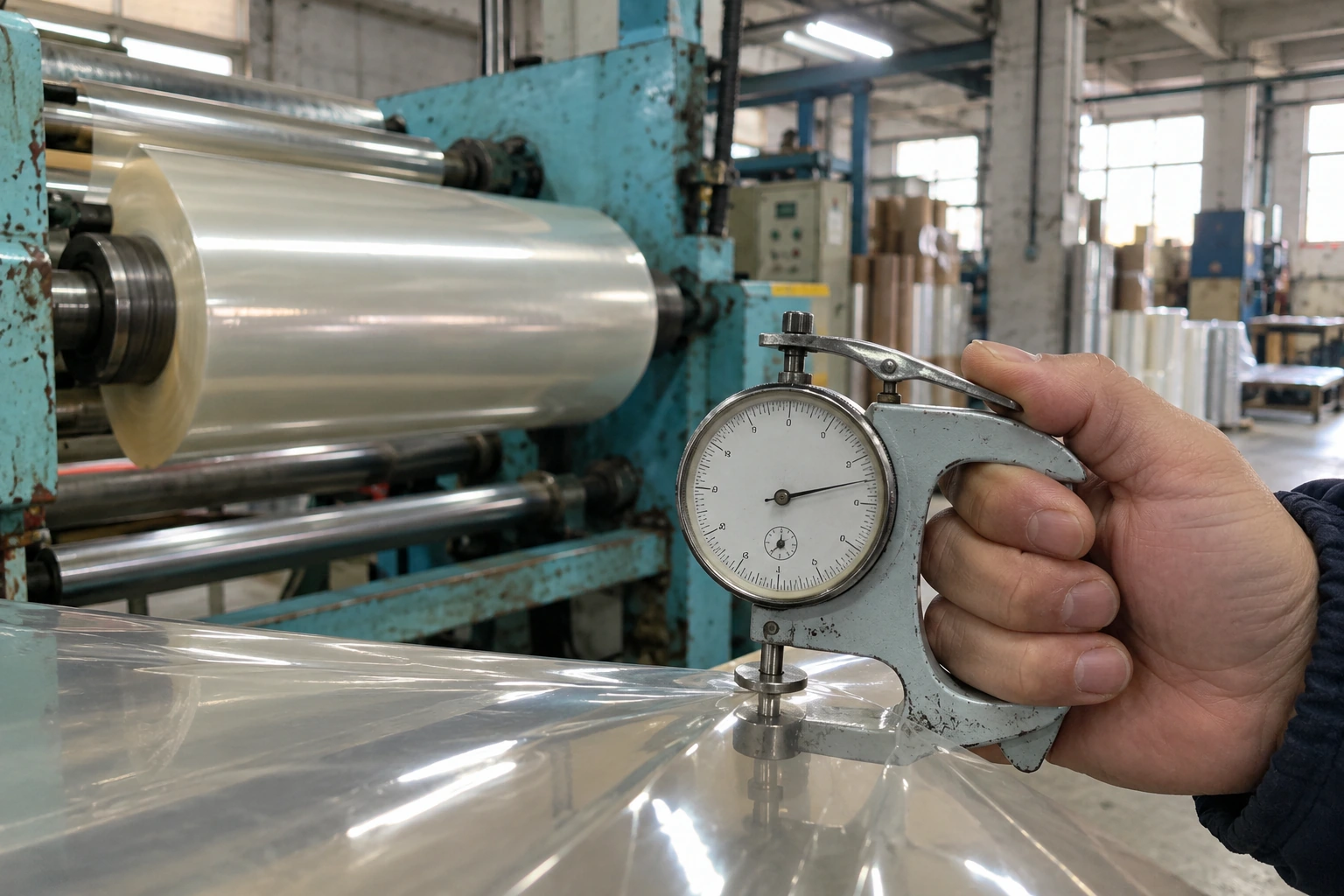
- Most failures are surface or application problems, not bad tape.
- Clean with isopropyl alcohol, apply above 15 °C and press firmly.
- Allow 24–72 hours for acrylic adhesives to reach full strength.
When a tape lets go, the instinct is to blame the tape. In practice most failures trace back to one of seven causes — and most are fixable without changing supplier.
1. Contaminated surface
Dust, oil, mold-release agents and fingerprints sit between adhesive and substrate. Wipe with isopropyl alcohol (IPA) and let it flash off. Do not use household cleaners that leave surfactants.
2. Low-surface-energy plastics
PE, PP, powder coatings and some textured paints resist wetting. Use an adhesive designed for LSE surfaces (modified acrylic or rubber) or a primer.
3. Cold application
Below about 10–15 °C most adhesives are too firm to flow into the surface. Warm the part and the tape, or choose a cold-temperature grade — important for carton sealing in unheated warehouses.
4. Not enough pressure
A pressure-sensitive adhesive needs pressure to make contact. Use a roller or firm hand pressure across the full width; on acrylic foam tape, about 100 kPa (15 psi) is a common recommendation.
5. Plasticizer migration
Flexible PVC and some rubbers release plasticizers that soften adhesives over weeks. Specify a plasticizer-resistant acrylic.
6. Wrong adhesive or wrong load
Peel strength is not hold strength. A constant load needs a good shear rating; see how to read a data sheet. For walls and painted surfaces, read our ranking of wall-safe mounting tapes.
7. Old or badly stored stock
Heat and sunlight age adhesives. Store rolls flat or on edge in cartons at room temperature, and rotate stock.
A quick checklist before blaming the tape
- Surface cleaned with IPA and dry?
- Applied above 15 °C?
- Pressed firmly across the full width?
- Given 24–72 hours before loading?
- Adhesive suited to the surface and temperature?
If all five are yes and it still fails, tell us the surface, load and environment — we will suggest an alternative and send samples. Every batch we ship goes through thickness and adhesion checks, described in how tape is made.
Frequently asked questions
Why does my double-sided tape fall off the wall?
Common causes are dust or paint additives on the wall, cold application, too little pressure, or a load above the tape’s shear capacity. Clean, press firmly and choose a foam tape rated for the load.
Does tape expire?
Rolls stored for years in heat or sunlight can lose tack or leave residue. Store at 15–25 °C and 40–60 % relative humidity, out of direct light, and use stock in rotation.
Find these tapes in our catalog
Acrylic Foam & High-Bond Tape · Double-Sided & Mounting Tapes · Foam Mounting Tape
adhesion failuresurface preparationtroubleshooting
Related articles
Pressure-Sensitive Adhesives Explained: Acrylic vs Rubber vs Silicone
The three adhesive families behind almost every tape — how they work, where each one wins, and a…
Double-Sided Tape Guide: Foam, Acrylic High-Bond, Tissue, PET and Nano Gel
Six families of double-sided tape, what each carrier does, and how to match thickness, adhesive and liner to…
The 12 Largest Tape Categories in Our Catalog — Ranked by Number of Products
A live ranking of the tape categories with the most listings, with typical price ranges — useful to…